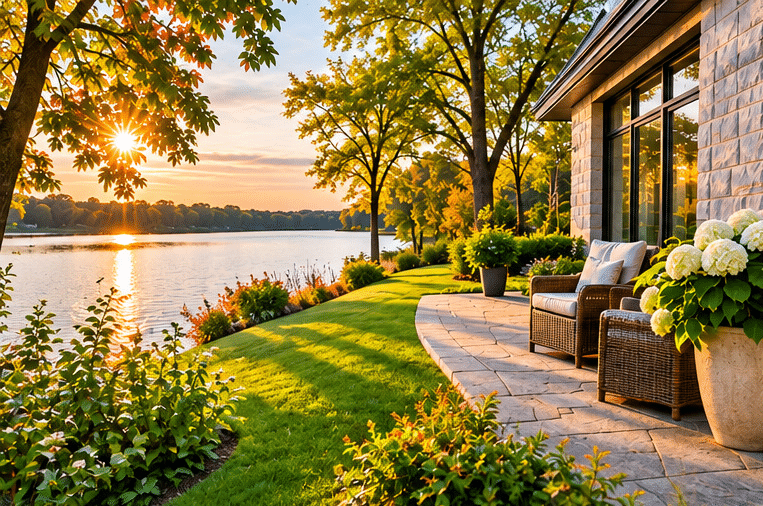
Buying a property near the water in Laval-sur-le-Lac requires verifying the property boundaries, the nature of access to the water, the applicable maps, the property’s history, and authorized construction work. These verifications must be conducted for the specific address, using the relevant documents and consulting the appropriate professionals. A view of the water alone does not confirm a right of access.
The scenery can naturally influence whether you fall in love with a property. To choose a home that also fits your daily life, however, start by describing your vision: gazing at the water from the house, enjoying a private yard, entertaining on a patio, or having access to the water’s edge. These expectations require different considerations.
This guide complements the overview of the Laval-sur-le-Lac area by focusing on the unique aspects of buying a home near the water. When inspecting the property, be sure to keep our home-viewing checklist handy.
Distinguishing Between a View, Water Access, and Waterfront Property
These three features are not interchangeable. A property may offer a view without bordering the body of water. A right-of-way may also cross a neighboring lot rather than being part of the property being sold.
When access is granted, request the documents that establish it and ask for clarification on its scope. Does it allow for pedestrian access? What uses does it permit? What obligations come with it?The OACIQ recommends verifying access rights in the title deeds and the Land Registry, and having the legal provisions interpreted by a qualified professional.
The goal is simple: to understand exactly what you’re buying before incorporating waterfront access into your lifestyle.
Understanding the Property Beyond Its Size
A large lot does not mean that its entire surface area is suitable for the same use. Consider the lot’s shape, its slope, the location of the house, the level of privacy you desire, and the space that is actually usable for your activities.
Next, request a location certificate that describes the current condition of the property.The OACIQ specifies that this condition includes both the physical and legal status. A relevant change may therefore be taken into account even if the house appears to be the same.
Prepare three questions for the land surveyor or notary: Where are the boundaries? What easements affect the lot? And what issues need to be clarified? A fence, a hedge, or the customary use of a space is not sufficient to answer these questions.
Check the maps for this address
It would be unwise to assume that all properties in a neighborhood share the same characteristics. The search must be based on the address or lot number.
The Government of Quebec provides a map to check flood zones and watercourse flow patterns. New-generation maps are being rolled out gradually; when they take effect for a given area, they replace the previous ones. Have the city confirm the information applicable to the property and the proposed project.
Keep a record of the dates of your research and the answers you receive. This allows your broker and the specialists you consult to work from the same information, rather than comparing an old screenshot with a current policy.
Confirm your renovation ideas before assuming they’re a done deal
A deck, a pool, a dock, or a waterfront renovation may be part of your vision. However, the feasibility of these projects must be evaluated separately from the purchase of the home.
Quebec regulations governing work in aquatic environments depend, among other factors, on the specific environment and the characteristics of the project. The government encourages property owners to consult their municipality first. The existence of a structure does not guarantee that a replacement or new development will be authorized under the same conditions.
Provide a simple sketch and a detailed description: desired location, intended use, and planned dimensions. A specific question is more helpful than “Can I landscape the yard?” If a certain feature is essential to your purchase, let your real estate agent know right from the start.
Review the Property’s History and Maintenance Responsibilities
Request the seller’s disclosures, any available reports, and documents related to previous work. For a property that has experienced flooding,the OACIQ emphasizes the importance of documenting the damage and repairs, particularly with invoices and photographs. An inspection tailored to the building can then guide further checks.
You should also consider exterior maintenance. The City of Laval notes that work to stabilize a riverbank requires the appropriate permits and is the responsibility of the property owner. If a structure seems important to the functionality of the property, ask a qualified professional for an assessment.
Finally, contact your insurer and lender with the exact address and the information you’ve gathered. Ask about their terms for this property and keep a record of their responses. Avoid basing your decision on the terms offered to a neighbor or the previous owner.
Turning Information into a Decision
Organize your analysis into three columns: what’s confirmed, what still needs to be verified, and what doesn’t align with your plans. This method helps you distinguish between a preference and an essential need.
For example, a pleasant view may be enough for a household that primarily wants to entertain at home. Another household may be looking for specific access for a particular activity. The same property will not necessarily meet the needs of both situations.
Tips for Your Project
Before committing to a future renovation, identify the two or three purposes that are the real reasons for the purchase. Have each one verified by consulting the appropriate documents and experts. This will make your comparison of properties clearer.
Frequently Asked Questions
Are all the properties in Laval-sur-le-Lac waterfront properties?
No. The name of the sector does not describe the location of each lot. Check the location, boundaries, and characteristics of the property you are interested in.
Does a view of the water automatically mean you have access?
No. The view and the right of access are two distinct features. The title and, if applicable, the easement must be examined.
Is the absence of known flooding sufficient grounds for a decision?
No. Cross-reference the available historical records with the relevant maps, property documents, and necessary verifications. Each source provides part of the answer.
Can I plan for a dock or deck right from the start?
You can include them in your project, but their feasibility and the required permits must be confirmed for the specific location before you take them for granted.
Where should I start if several documents are missing?
Work with your real estate agent to make a list, determine who can provide each document, and coordinate the necessary steps. Key points must be addressed in your transaction timeline.
Let’s Talk About Your Project in Laval-sur-le-Lac
Are you looking for a property that fits your vision of life by the water? Contact Nathalie Maréchal to discuss your criteria and plan the next steps in your search.