
Living in Sainte-Dorothée
lifestyle, amenities, and property types
When you’re looking for a property in Laval, you’re not just looking for an address. You’re looking for a lifestyle, an atmosphere, a way of getting around, a day-to-day way of living. That’s exactly why Sainte-Dorothée often comes up for buyers who want more than just a house. The area has a distinct personality, shaped by its history, its residential fabric, and an appealing balance between neighbourhood life, access to Montréal, and proximity to greener spaces. Historically, Sainte-Dorothée developed from what was originally agricultural land, and that origin still contributes today to its calmer, more open, more distinctive feel than some more urban areas.
When you’re looking for a property in Laval, you’re not just looking for an address. You’re looking for a lifestyle, an atmosphere, a way of getting around, a day-to-day way of living. That’s exactly why Sainte-Dorothée often comes up for buyers who want more than just a house. The area has a distinct personality, shaped by its history, its residential fabric, and an appealing balance between neighbourhood life, access to Montréal, and proximity to greener spaces. Historically, Sainte-Dorothée developed from what was originally agricultural land, and that origin still contributes today to its calmer, more open, more distinctive feel than some more urban areas.
What often wins people over first in Sainte-Dorothée is precisely that feeling of an established area—without being stuck in time. There’s a real local rootedness. Vieux-Sainte-Dorothée and the area’s public square contribute to a more human-scale reading of the neighbourhood. This isn’t a cookie-cutter environment. It’s a part of Laval with a memory, a lived-in rhythm, and tangible landmarks. The Sainte-Dorothée community centre also adds to that sense of closeness, because a pleasant neighbourhood isn’t defined only by its homes, but also by the places where community life can happen. For a buyer, that matters a great deal—especially when you’re planning to settle in for several years.
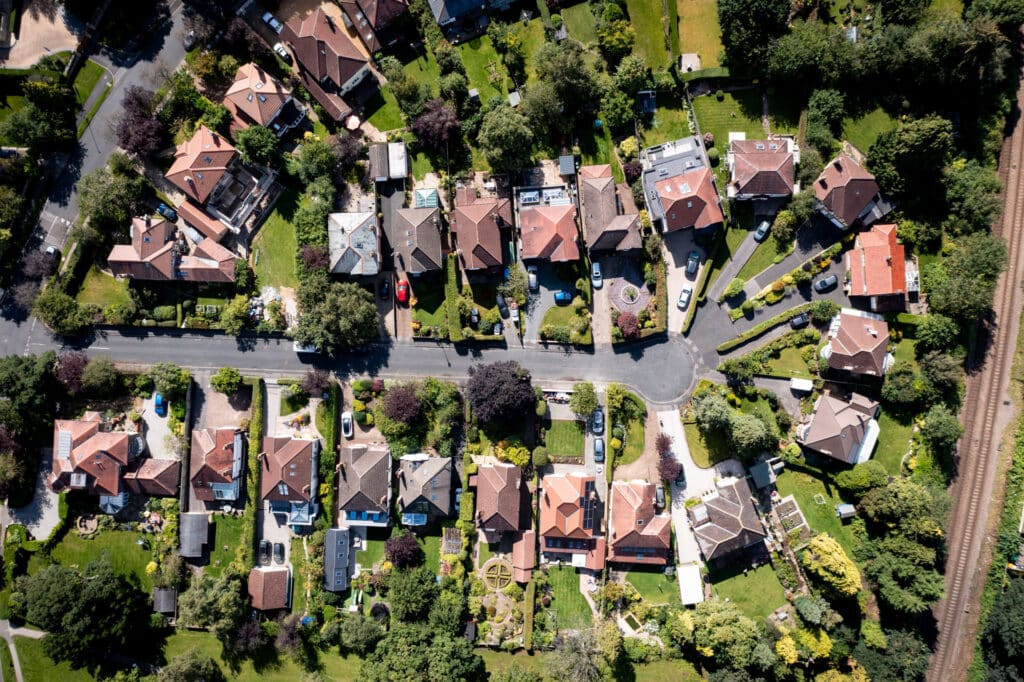
Another major strength of the area: mobility. For many professionals, young families, and even active retirees, ease of getting around has become a criterion as important as the property itself. Sainte-Dorothée has a concrete advantage with the Sainte-Dorothée REM station. The City of Laval clearly identifies this station as one of the key access points for public transit on its territory, and Exo indicates a travel time of about 34 minutes between Sainte-Dorothée station and Montréal’s Central Station. In practice, that changes how you choose your area: you can aim for a more residential setting without feeling like you’re completely sacrificing access to downtown.
Daily life, however, isn’t only about transportation. Living in Sainte-Dorothée also means wanting a bit more breathing room in how your days are organized. The area often lets you think about your purchase based on the real rhythm of your family or couple: morning routines, back-and-forth trips, activities, time spent outdoors, the need for privacy, the ability to entertain, parking, the yard, the feeling of space. The Bois de Sainte-Dorothée, for example, is one of the natural landmarks that reinforces the area’s appeal for people who are sensitive to the immediate environment around their home. It’s not just a decorative detail. For many buyers, having a natural setting nearby directly influences their perception of quality of life.
From a real estate standpoint, Sainte-Dorothée appeals to a range of buyer profiles, but not always for the same reasons. Some are looking for a family home with more indoor and outdoor space. Others want an area perceived as quieter, better suited to a structured day-to-day life, without moving away from Laval. Others prioritize long-term potential: a well-located property in an area that remains highly desirable is often more likely to weather market shifts than a purchase made purely on a whim. That’s why you should avoid viewing Sainte-Dorothée as one big, uniform whole. From one micro-area to another, the experience can be very different: atmosphere, traffic, privacy, immediate surroundings, proximity to access routes, mature trees, level of activity, and the type of property available.
So the real question isn’t just, “Is Sainte-Dorothée a nice area?” The better question is, “Which version of Sainte-Dorothée fits my way of living?” To answer that intelligently, you need to clarify your priorities before you start multiplying visits. Do you want to prioritize commute time? Quiet? Lot size? A property that’s easier to maintain? An environment that gives you a stronger neighbourhood feel? A home suited to a new stage of life? That clarity keeps you from wasting time on properties that look appealing on paper but don’t truly match your day-to-day life.
That’s also where local guidance makes a difference. Choosing a property isn’t just comparing the number of bedrooms or the kitchen finishes. It’s understanding how a street feels to live on, how an area is experienced, how an address fits into your pace and your goals. A good real estate decision is built at the intersection of logic, lifestyle, and long-term positioning. In an area like Sainte-Dorothée, that nuanced reading is essential, because you’re often buying the setting as much as the house.
In practice, I recommend that Sainte-Dorothée buyers visit with a simple decision framework. First, observe the area before the house: the approach, the overall feel, the level of quiet, real accessibility. Next, assess the property based on your life horizon, not only your immediate needs. Finally, ask yourself a strategic question: will this property still serve you well in three to five years? When a purchase answers that question with confidence, you’re usually much closer to a solid decision.
Sainte-Dorothée is especially well suited to buyers who want to combine neighbourhood identity, smart mobility, and a reassuring residential environment. It’s not an area you choose only because it’s “nice.” You choose it because it lets you build a coherent day-to-day life. And in real estate, it’s often that kind of coherence that turns a good purchase into an excellent decision.

Schedule a visit or a discovery meeting
FAQ
Why is Sainte-Dorothée so popular with buyers?
Because the area combines a strong local identity, a key public transit connection via the Sainte-Dorothée station, and a residential environment shaped by community and natural landmarks.
Is it a good area for a family?
Yes, if you’re looking for a calmer living environment, with a neighbourhood feel and spaces that support day-to-day life. The right choice then depends on the type of property, your routine, and the micro-area you’re targeting.
Is commuting to Montréal realistic?
Yes. Sainte-Dorothée station is part of the REM network in Laval, and Exo indicates a travel time of about 34 minutes to Central Station for the commuter train from Sainte-Dorothée station.
How do you choose the right property in Sainte-Dorothée?
Start from your real lifestyle: commuting, space needs, desired maintenance level, life horizon, and the level of quiet you’re looking for.
Should you visit several streets before making an offer?
Yes. In a sought-after area, the quality of the address and the immediate surroundings matter almost as much as the property itself.